Monday, May 20, 2013

Photography Edit Challenge: Color Blind


For this project students used the color replace tool from the online photo editor Pixlr. See video below for tutorial. The project is extremely simple and can offer some astonishing results. 

video


I allowed students to choose their image, but encouraged a recognizable image from nature. Mainly because the visual impact of this edit challenge is increased when the viewer recognizes the animal or plant that is being manipulated. Black and white animals tend not to work as well as colorful ones, zebras and pandas are not the best when working in pixlr.

I like using pixlr because #1 it's FREE! Photoshop is definitely superior, but so many of the tools, accessories, and filters in pixlr correlate so closely with photoshop if you learn one you can easily understand the other.


Tuesday, April 16, 2013

Dale Chihuly Recycled Sculptures


For this project students were challenged to create a recycled sculpture inspired by Dale Chihuly. On Day 1, after looking at some images of dale chihuly's glass work, we brainstormed different materials that could apply to this project (other than glass). I gave examples on how to manipulate the materials and think about using them in alternative ways. Some examples included plastic pop bottles, old transparency sheets, wire, tissue paper, newspaper, ribbon, foam, white drawing paper, ripped fabric/canvas, etc.

After day one work time was fairly independent. I would supplement each days lesson with short tutorials and demo new techniques, but for the most part they were made aware of deadlines and led the way.
With all of the materials floating about it can feel chaotic and with the level of independence expected it is necessary to schedule check-ins with students. Having a rubric of expectations was important to make sure all students were aware of the grading criteria. If I were to give any advice to those wanting to attempt a similar project I would say share the rubric on day 2 or three of the project, and hold at least two individual conferences with each student during work time. The one on one conferences act as a critique of sorts where students can ask for and listen to advice.

Foam pink ribbon support with hanging shapes cut from
permanent marker covered plastic transparencies. 

The wide array of results was astounding to me! 

Variety of ribbon hanging from a wire spiral

Looped paper and origami

Tissue paper supported on a wire armature with oil pastel
overhead transparency tendrils hanging below. 


Display in the main office!

Thursday, April 4, 2013

Photography: Rules of Composition


video

When teaching photography we usually start with conversations about composition. I break down the rules of composition into 8 categories including rule of thirds, lead in line, cropping, viewpoint, framing, depth, background and symmetry. These are just a way to help focus the photographs. The results our first project of the second semester are included in the slideshow above. Enjoy! 


Wednesday, April 3, 2013

Anthotypes: intro to photography, no camera needed

An Anthotypes is an image created on an surface covered in light sensitive plant based material. Think of it as one of the first photographic methods. I completed this project with middle school ages students but really you could do this with children in 1st or 2nd grade. I great way to introduce photography and its methods without needed 25-30 cameras! 

The images you see were created by painting the juice from crushed up blackberries (emulsion) onto tag board.  Once they were dry a paper cutout previously made was placed on top.  
An example of an undeveloped emulsion with the paper cut outs still attached. 
 We used small bits of sticky tack and a photo frame to hold everything together. After sitting in a window for a month to removed the paper and revealed our photograph. (our school is near seattle so we don't see a great amount of direct sunlight, resulting in a longer exposure time)

Some words of wisdom, keep the anthotypes at school if at all possible. I work in a basement space and had no area to let the images sit in the sun. I had my students take the images home and return them in a month, but the results are much more spotty. Some images I never see again after they leave class. 


Tuesday, April 2, 2013

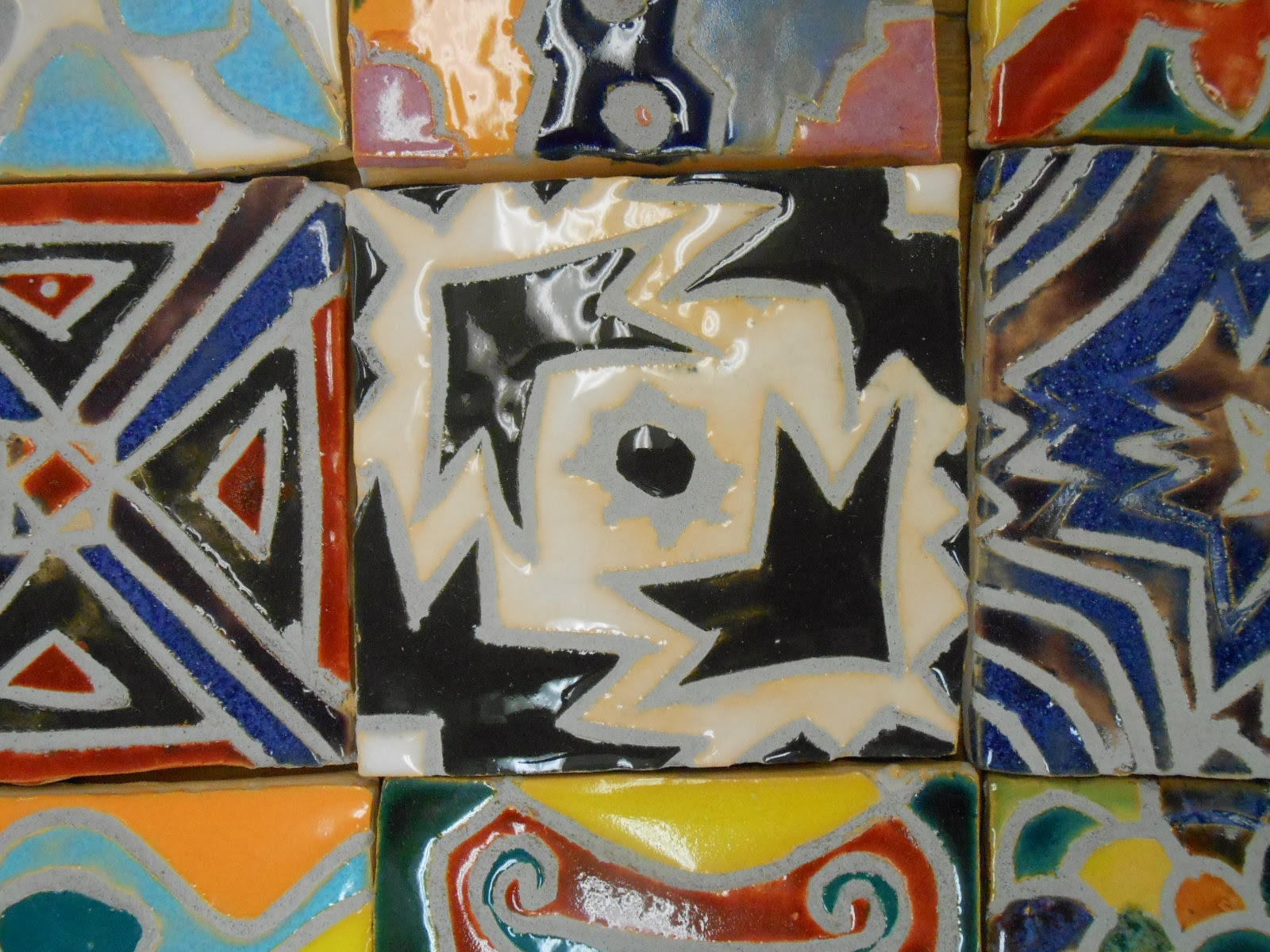
Clay Tile Mosaics

I always hesitated trying out mosaics in my classroom because I was under the impression that they were really expensive to create. I couldn't have been further from the truth!
I would search google and comb through blogs looking for ways I could make the project happen for less than .50 a student (which I have found to not surprisingly be impossible if you are purchasing glass or tile mosaics pieces)
Then it hit me one evening... make your OWN tiles! I over ordered clay and was needing to use it up anyways... I also had a bunch of scrap wood pieces to use as the backing board. All I had to purchase was the grout and glue. perfect!

 Making the tiles was a cinch, a basic slab and paper template demo was all that was needed to show the students after sketching out some ideas. And BONUS! kiln space is not an issue... Everything is FLAT and I was able to get all project pieces bisque fired in one shot, even with a smaller kiln
I purchased the large gallon and dispersed it into small disposable bowls . Students used a junky old paint brush to place the glue on the back of the tile piece. This is a non-toxic, water based glue, that is extremely economical and very easy to find and will securely bond the tile to many different surfaces.  

Any sanded grout will due. I like to use  a dark gray grout. If you purchase a white grout you can add acrylic paint to the mixture to color it any color you like. I like to purchase a dry mix and then mix it outside the classroom before school starts (you need an air tight container to prevent it from drying out). A more hassle free pre-mixed grout is less of a classroom headache, but much more expensive. This bag will run you about $10 or so. 
Here are the steps:
1) Sketch and create templates (make sure students are aware of their base board size so they know how much space they will need to take up)
2) Create a slab, and use template to cut out (I like using x-acto blades, but needle tools work as well)
3) Make 3 extra 6"x6" tiles, these will work as your background tile pieces to break up later
4) bisque fire and glaze fire all tiles (use a kiln safe pencil or underglaze to place initials on back of tile pieces.
 5) Once out of the kiln, students may begin placing and gluing tiles onto their board.
6) Start with main tile and then add smaller pieces. You can use a tile nippers for breaking slabs into smaller pieces, but that was kinda fussy for me... instead... we used old canvas to wrap the tiles in before safely smashing them with a hammer. Worked surprisingly well! just remember safety glasses!
7) Glue, glue, glue as you go, one bump from a neighbor could erase a whole days work.
6) Let sit over night after all pieces have been placed down, and grout after 24 hours.
7) If mixing grout, follow box directions, one person told me once that the grout mixture should be the consistency of sturdy browny mix... whatever that means.
8) Once grouted, rub the surface of the mosaic vigorously in circular motions with an old rag, I used old t-shirts. Do this until all tile pieces are clean and grout free. Use a small dab of water on the rag if necessary in spots stubborn to clean.
 What a unique piece of art to cherish! Loved them all, more to come with my new semester soon!

Saturday, March 23, 2013

See what I have been up to!

https://www.etsy.com/shop/ElevenSkiesStudio

Recently I have been working on creating some jewelry and decided it was time to open up an etsy shop! I call it "Eleven Skies Studio". The name comes from all of the mnemonics my students would creating in order to remember my name. The greatest include "eleven dusty skis" and "lemon skies". I decided to take a combination of both. 

As an art teacher. time is constantly being devoted to fostering the creative growth in others. A creative habit, however, should not only be taught, but also explored. Jewelry is just one of my explorations into many artistic ventures that are intended on keeping me at my creative best. 

If you have a moment please check it out and let me know what you think! https://www.etsy.com/shop/ElevenSkiesStudio

Friday, May 25, 2012

Tissue Paper Windows


I am completing some glass on glass mosaics for the end of the school year on some hold skylights from the high school library (pictures coming soon!). We used up all the glass but we were left with three extra windows! I'm was not able to purchase any more mosaic materials so I was left scouring the web for some ideas. I can't remember what site exactly had posted an activity where children painted tissue paper onto windows, but once I spotted it I knew that is what we had to do!


We started by ripping the tissue paper into smaller pieces. Then once we had a pile, students started painting elmer's art pastel over the glass pane and onto the tissue. We layered and observed our colors mixing together. I left the project open for exploration. I was curious to observe their solutions.


Once dry they will be installed in a window space somewhere in the school. I'm expecting the tissue paper to fade eventually, but with warm soapy water the window and be wiped clean for another creation. Looks like a faux stained glass masterpiece!


UPDATE: Here is an image of a mosaic we did on the extra window! now on display at the district office (taken from my phone camera, not the best image but you can still feel the sparkle)